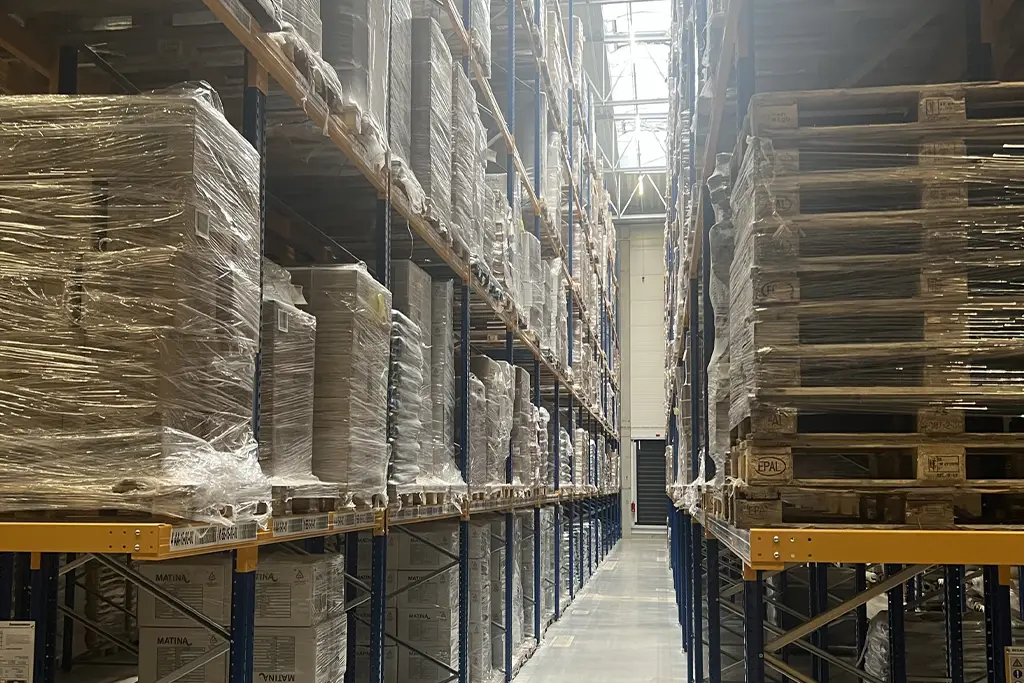
The picking of goods is a key process in logistics that has a huge impact on the efficiency of warehouses. Its efficiency determines whether orders are delivered quickly, accurately and in accordance with customer expectations. Dynamic technological developments and changing customer needs mean that the picking process is constantly evolving.
Definition of commissioning – what is it and why is it so important in logistics?
Commissioning in logistics is the process of picking goods from a warehouse to prepare them for dispatch. It takes place in accordance with customer orders. Its importance in the supply chain is invaluable, as effective picking ensures timely and accurate order fulfilment, which directly affects customer satisfaction.
We can understand this as the stage between the receipt of goods and their dispatch, in which the bulk cargo units are separated into smaller, individual parcels and then completed according to specific orders. This process can be carried out using different methods, depending on the specific characteristics of the goods and the warehouse. The correct planning and implementation of picking, with the right choice of technology and methods, allows work to be optimised. It ensures a reduction in errors and an increase in productivity, which is particularly important in view of the growing expectations of the market.
Commissioning in logistics: Learn about the key stages of the order picking process
Commissioning in logistics is the heart of any warehouse, responsible for ensuring that orders reach customers quickly, accurately and error-free. The entire process consists of several stages. From the moment the order is placed to the moment the products reach the customer’s hands. Each step must be carefully planned and executed. Below is a detailed description of the various stages of the picking process, which are key to getting it right.
- Order preparation – This is the initial stage that involves verifying the details of the order. In this process, the completeness of the products ordered is checked, their availability in stock and the necessary documents are prepared. In this way, the order collection processes take place efficiently and the risk of mistakes is minimized.
- Product picking – This stage involves the physical picking of goods from the appropriate locations in the warehouse. It can be carried out manually by employees or supported by automated systems such as warehouse trucks or material handling systems. It is important to collect the products in the right order, allowing the whole process to be optimized.
- Inspection and verification – Once the goods have been collected, the next step is to inspect them in detail. This includes checking that the order has been collected correctly, both in terms of quality and quantity. The aim of this step is to make sure that the customer receives exactly what they ordered, minimising the risk of complaints and returns.
- Packing and shipping – The final stage of picking is to properly pack the collected products and prepare them for transport. In this process, it is important that the products are packed as required and that they are labelled accordingly. After this stage, the order is ready to be dispatched to the customer, completing the entire picking process.
Commissioning versus consolidation – how do they differ in logistics?
Picking and consolidation are key logistics processes, but have different purposes and applications. As we mentioned above, picking focuses on picking individual orders, preparing goods according to customer requirements. Consolidation, on the other hand, focuses on combining multiple shipments into a single load, reducing transport costs and increasing efficiency. Picking is common in e-commerce and B2C handling, while consolidation is mainly used in international and wholesale shipments. We have looked more into the consolidation process in a separate article on the subject: How consolidation and deconsolidation affect logistics?

Commissioning methods in logistics: Which solutions will ensure efficiency and savings?
Choosing the right picking method not only influences lead times, but also delivery accuracy and operational costs. In the dynamic logistics industry, where every second matters, companies need to adapt strategies to the specifics of their warehouses and customer expectations.
Some of the most commonly used methods are the ‘man to goods’ and ‘goods to man’ approaches. Each offers different benefits and works well in a variety of settings – from smaller warehouses with manual product retrieval to sophisticated automated systems in large logistics centres – such as LCL Logistic.
Man to goods method:
In this method, it is the warehouse worker who moves around the facility, visiting different storage areas to retrieve the required products. This is particularly effective for smaller orders or low-weight goods, where short picking times and a minimum number of products to be collected are crucial. This method is relatively simple to implement and does not require a large investment in automation. However, for larger warehouses and more complex processes, this method can be less efficient. It requires staff to travel longer distances, which significantly increases order processing times.
Goods-to-man method:
In the goods-to-man method, on the other hand, the warehouse worker remains in one place and the products are delivered to him or her by means of warehouse transport equipment such as trolleys, conveyor belts or automated systems. This type of solution works well in larger warehouses where fast and efficient order picking requires advanced technological support. Thanks to the automation of processes, this method is much more efficient, especially in the case of large orders or in warehouses with large areas.
The key to effective commissioning is a well-chosen strategy
In summary, the picking of goods is the foundation of efficient logistics. The methods of appropriate picking, on the other hand, have a direct impact on lead times, delivery accuracy and operating costs. Regardless of the chosen strategy, the key to a company’s success is to adapt the methods to the specifics of the warehouse and the needs of the customers.
At LCL Logistic, we understand the challenges of picking very well. With state-of-the-art technology and a skilled team, we offer customised solutions for a wide variety of needs. Our services, such as contract logistics, crossdock, spedycja, fulfillment or renting warehouse space, they support customers at every stage of the supply chain, ensuring speed, precision and complete satisfaction.
We encourage you to contact our team to learn more about the full range of opportunities we offer. At LCL Logistic, we help create modern and efficient logistics solutions that enable our clients to succeed in a dynamic market. Contact us to learn more about our exact offering!